
Stiff Hips Are Costing You More Than You Think: A Practical Guide to Getting Your Range Back
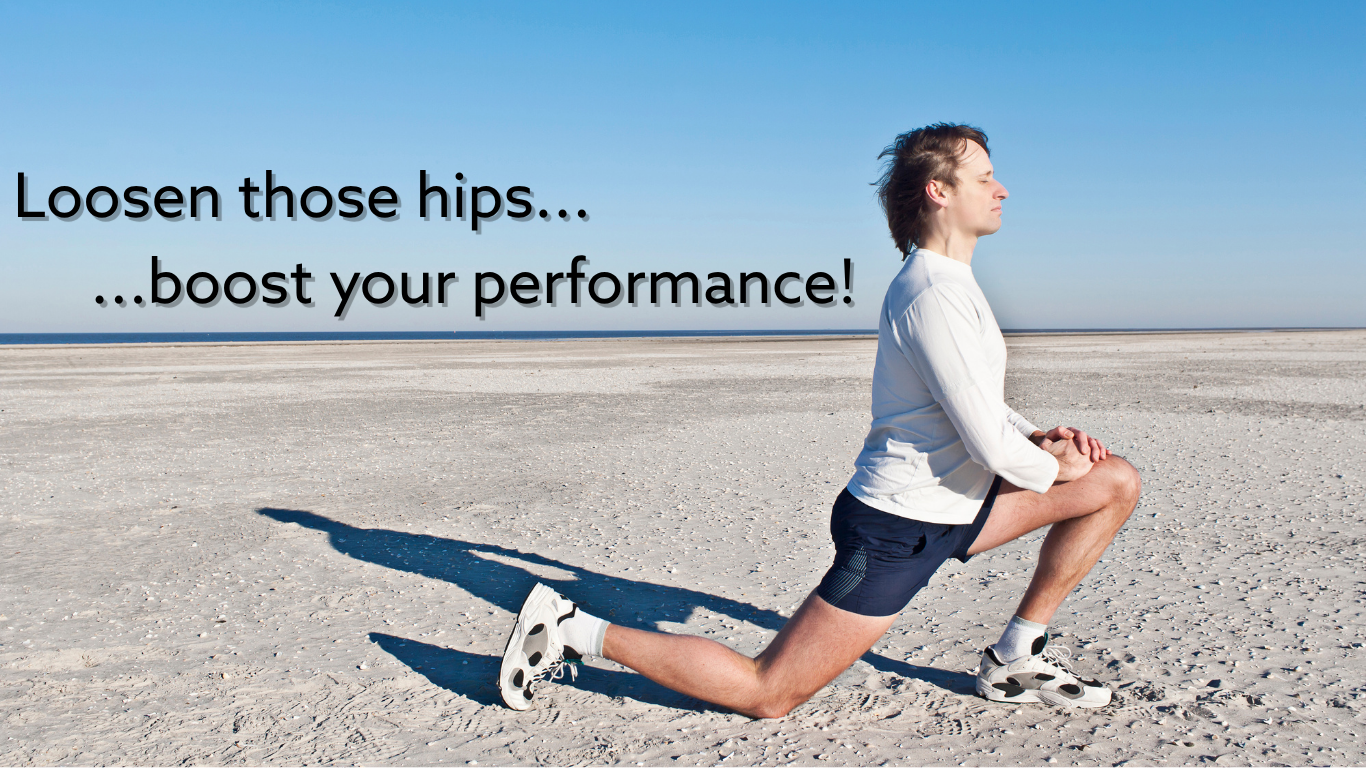
Ever climbed a flight of stairs and felt like your hips were moving through wet cement? Or tried to get comfortable after a long drive, squatted at the gym, or knelt in the garden and thought, “Well, that’s tighter than it used to be”?
You’re not alone. And “stiff hips” don’t necessarily mean something is damaged or that you need to spend the next hour folded into a pretzel.
Hip mobility can matter when it gets in the way of activities you care about: hiking the trails around Port Alberni, running, lifting, working on your feet, or getting ready for ski season. The useful question isn’t whether your hips move like somebody else’s. It’s whether they move well enough for your life, and whether you can control that movement.
First: Is limited range actually a problem?
People naturally have different amounts of hip movement. Our bodies aren’t made with identical hinges, and there’s no single perfect range everyone needs to achieve. A range that looks limited in one position may be perfectly normal for that person.
Less movement also doesn’t automatically mean pain, poor performance, or a future injury. If your hips feel fine and you can do the things you want to do, you may not need to “fix” anything.
But if stiffness is making everyday tasks harder, or you’ve noticed a new, painful restriction, it may be worth investigating. That includes struggling to get low in a squat, taking shorter steps after sitting, or avoiding kneeling because it feels uncomfortable.
What do we mean by “hip mobility”?
Mobility is more than how far your hip can be moved by someone else. It’s also how far you can move it yourself, and how comfortably and confidently you can control that range.
Think of it like reaching for something on a high shelf. Your shoulder needs enough range, of course. But you also need to be able to control your arm there. The hip works in much the same way: available range is one part of the picture, and strength and control are another.
A feeling of stiffness can have different contributors: the muscles and tendons, the joint’s shape, pain, how much you’ve been moving lately, or how confident and strong you feel near the edge of your range. That’s why there isn’t one magic stretch for every stiff hip.
Why stretching helps, but may not be the whole answer
Stretching can help increase range of motion. Research supports it, so let’s not toss your favourite hip-flexor stretch into the recycling bin. A systematic review and meta-analysis found that regular stretching improved range of motion across the studies it reviewed.
Here’s the catch: a temporary feeling of looseness isn’t always the same as lasting change. And being able to relax into a stretch doesn’t automatically mean you’re comfortable producing strength or control in that position.
The encouraging news is that stretching isn’t the only route. A systematic review comparing strength training with stretching found no meaningful difference between the two for improving range of motion. A small 2024 trial also found that full-range resistance training improved flexibility, while offering the added benefit of strength gains.
In plain English: if a particular range matters to you, it can make sense to practise moving into it and build the strength to use it. Not by forcing your body into a position it dislikes, but by gradually working within a comfortable range and making that range more capable.
Try this gentle hip-mobility self-check
This is a simple way to notice how your hips feel today, not a diagnostic test, and definitely not a pass-or-fail exam.
- Stand near a wall or sturdy chair for balance.
- Slowly lift one knee towards your chest, only as far as feels comfortable.
- Notice whether you can lift it without leaning your trunk back or twisting to one side.
- Lower your foot, then try the other side. Compare how each feels, not just how high your knee goes.
A difference between sides can be completely normal. So can a lower lift on both sides. The useful information is whether the movement feels comfortable and controlled, and whether it connects to a problem you’re actually having. Don’t push into a sharp pinch or force the knee higher to “win.”
You can also try a supported squat to a chair: stand in front of it, lower yourself slowly until you lightly touch the seat, then stand again. Notice whether you can do it comfortably and steadily. This is a whole-body movement, so ankle, knee, balance and strength all play a role too. It’s not a pure test of hip mobility.
A practical approach: explore, then strengthen
You don’t need a complicated routine, or a floor-based stretch that turns getting back up into its own workout. Start with movement you can control, then build gradually.
Explore a comfortable range. Try a few slow hip movements, such as standing marches or gentle knee lifts. Keep the movement easy. The goal is to get moving, not to stretch as hard as possible.
Practise rotation if it feels useful. A seated 90/90 position can be one option: sit with both knees bent and let them fall gently to one side, then the other. Use your hands for support and stay within a comfortable range. If it causes a pinch or your body is clearly saying “no thanks,” choose a different movement.
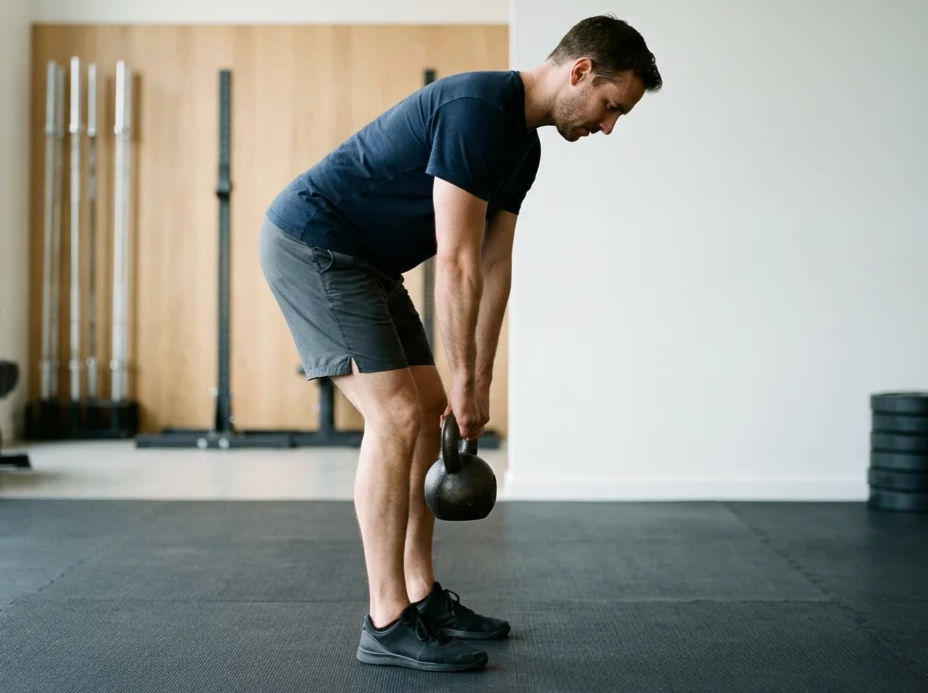
Add strength through range. Supported split squats or lunges let you work through hip movement while building leg strength. Start shallow if that’s comfortable; gradually go a little deeper as it feels manageable. A squat to a box or chair can serve a similar purpose. You can also try a controlled hip hinge, as if pushing your hips back to close a car door behind you.
Progress the challenge, not the discomfort. Begin with a version you can do smoothly. Over time, you might lower the squat target, take a slightly longer split stance, or add a light weight. That is progressive loading: asking your body to do a little more as it adapts, rather than demanding a dramatic new range on day one.

The right exercise depends on what you’re working towards. A hiker may want comfortable stepping and climbing. A warehouse worker may need repeated squatting and lifting. A gym-goer might want to reach a deeper squat. A runner may care more about moving comfortably through strides. There isn’t one hip-mobility routine that fits every person, and that’s not a failure of the routine. It’s just how bodies and goals work.
As a rough guide, a gentle stretch or exercise should feel manageable during the movement and leave you no worse afterwards. Some mild effort or temporary muscle sensation is expected when you exercise. Sharp pain, a strong pinching feeling, or symptoms that keep worsening are reasons to stop and reconsider the movement. If you’re unsure how to progress, getting advice is better than turning every session into a negotiation with your hip.
When should you get your hip assessed?
Consider a professional assessment if your stiffness is persistent, noticeably worsening, or limiting work, walking, sport or daily activities. It’s also worth getting guidance if you have pain with catching or locking, a significant change after an injury, or difficulty putting weight through your leg.
A physiotherapist can look at more than a stretch test: how your hip moves, how you control it, what activities bring on symptoms, and what you need to get back to. That helps make the plan specific to you, not a generic list of exercises downloaded from the internet at 11:47 p.m.
At Innov8 Physiotherapy, our approach combines individual assessment with active rehabilitation. You can learn more about our physiotherapy and other services, or see how a tailored rehab program can help you build capacity with exercises that fit your goals.
So, do stiff hips need stretching? Sometimes. Do they always need more stretching? Not necessarily. Often, the practical goal is to find a comfortable range, move through it regularly, and build strength and confidence there over time.
Start with a small step. Your hips don’t need to win a flexibility competition; they just need to help you get where you want to go.